
Conference Aerospace Europe Conference 2021
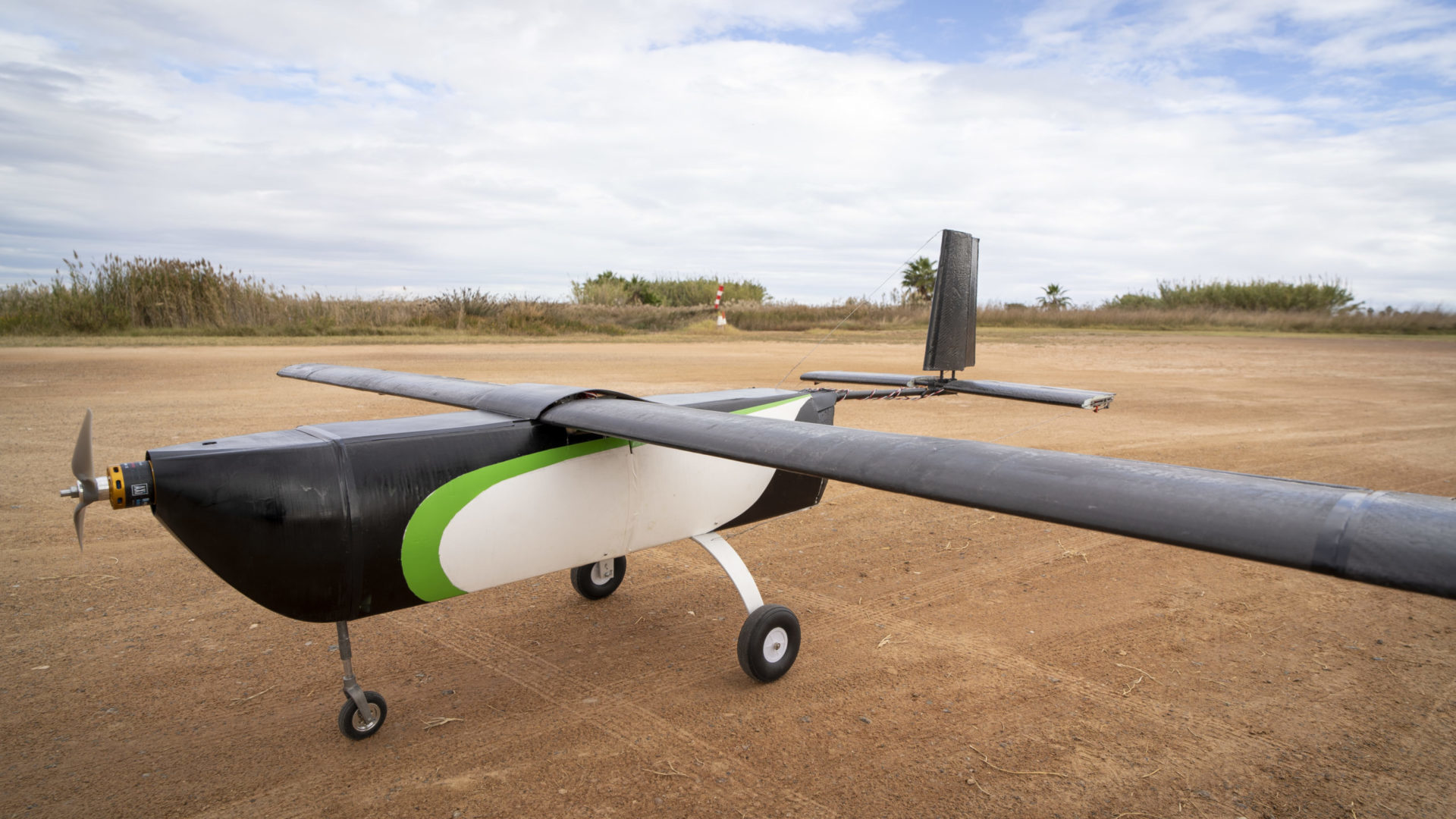
Systems electrification in the unmanned aerial vehicle (UAV) and short-range aircraft industries is a trend that is becoming consolidated as the foundation for the future of this part of the aerospace sector. Among the possible electric powerplants currently driving low-payload UAVs (up to around 10 kg of payload), batteries offer clear benefits with respect to other powerplants due to their compactness, light weight, and flexible operations in distributed propulsion systems when low energy capacity is required. Nonetheless, for medium-payload UAV/aircraft operation such as aerotaxis and heavy-cargo transportation UAVs, the requirements in terms of battery capacity to achieve acceptable range and endurance restrict their usage due to the high weight and volume they imply. In light of this situation, fuel cell (FC) systems (FCS) offer clear benefits over batteries for the medium-payload UAV segment (>50 kg), as their energy density is higher. They also have potential advantages over internal combustion engines, as they operate without pollutant emissions and are more compatible with distributed propulsion systems. Nevertheless, the studies in the literature regarding the application of FCS powerplants to this UAV segment are limited and the in-flight performance has not been clearly analyzed. In order to address this knowledge gap, a feasibility analysis of these particular applications powered by FCS is performed in this study. For that purpose, a validated FC stack model (40 kW of maximum power) was integrated into a balance of plant to conform an FCS. As a novelty, the management of the FCS was optimized to maximize the FCS efficiency at different altitudes up to 12500 ft, so that the operation always implies the lowest H 2 consumption regardless of the altitude. In parallel, an UAV numerical model was developed based on the ATLANTE vehicle and characterized by calculating the aerodynamic coefficients through CFD simulations. Then, both models were integrated into a 0D-1D modelling platform together with an energy management strategy optimizer algorithm and a suitable propeller model. With the preliminary results obtained from the FCS and UAV models, it was possible to ascertain the range and endurance of the vehicle. As a result, it was concluded that the combination of both technologies could offer a range over 600 km and an endurance over 5 h. Finally, with the integrated UAV-FCS model, a flight profile describing a medium altitude, medium endurance mission was designed and used to analyze the viability of FC-powered UAV. The results showed how UAVs powered by FCS are viable for the considered aircraft segment, providing competitive values of specific range and endurance (View Full-Text).